
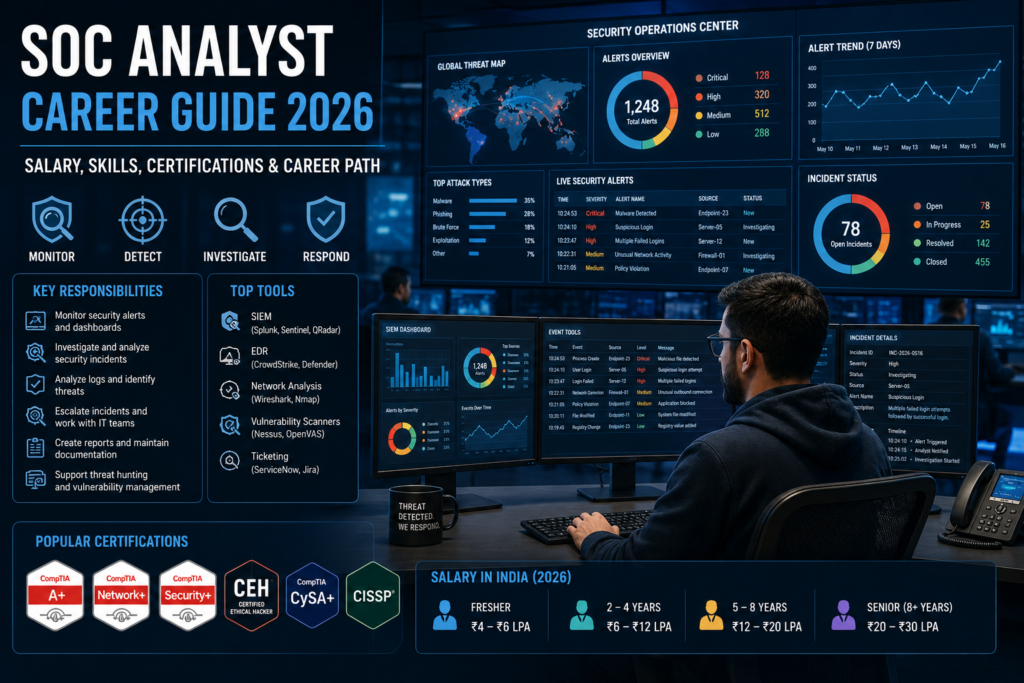
Introduction
SOC Analyst Career Guide helps aspiring cybersecurity professionals understand what a Security Operations Center (SOC) Analyst does, the skills required, salary expectations, certifications, and how to start a successful cybersecurity career.
As cyber threats continue to increase, organizations rely on SOC Analysts to monitor, detect, investigate, and respond to security incidents. This role is one of the most common entry points into cybersecurity and offers excellent growth opportunities.
What is a SOC Analyst?
Explain:
- Security Operations Center
- Monitoring security alerts
- Incident investigation
- Threat detection
- Log analysis
- Security monitoring
What Does a SOC Analyst Do?
Daily responsibilities:
- Monitor SIEM tools
- Investigate alerts
- Analyze logs
- Escalate incidents
- Threat hunting
- Create reports
Skills Required to Become a SOC Analyst
Technical Skills
- Networking
- TCP/IP
- DNS
- Firewalls
- Linux
- Windows Security
- Active Directory
Security Skills
- Incident Response
- Threat Detection
- Malware Analysis
- Log Analysis
- Vulnerability Management
Soft Skills
- Problem Solving
- Communication
- Documentation
- Analytical Thinking
SOC Analyst Tools You Should Learn
SIEM Tools
- Splunk
- Microsoft Sentinel
- QRadar
- LogRhythm
Endpoint Security
- CrowdStrike
- Microsoft Defender
Network Security
- Wireshark
- Nmap
Vulnerability Scanning
- Nessus
- OpenVAS
Certifications for SOC Analysts
Beginner
- CompTIA A+
- Network+
- Security+
Intermediate
- CEH
- CySA+
Advanced
- CISSP
- CISM
Internal links to your certification guides.
SOC Analyst Salary in India (2026)
| Experience | Salary |
|---|---|
| Fresher | ₹4–6 LPA |
| 2–4 Years | ₹6–12 LPA |
| 5–8 Years | ₹12–20 LPA |
| Senior SOC Analyst | ₹20–30 LPA |
SOC Analyst Salary by Company Type
Service Companies
- TCS
- Infosys
- Wipro
- Accenture
Product Companies
- Microsoft
- Amazon
- Palo Alto Networks
Discuss typical salary differences.
How to Become a SOC Analyst
Step 1
Learn Networking
Link:
- CCNA
- Network+
Step 2
Learn Security Fundamentals
Link:
- Security+
Step 3
Build Hands-On Skills
- TryHackMe
- Hack The Box
- Blue Team Labs Online
Step 4
Earn Security+ Certification
Step 5
Apply for Entry-Level Roles
SOC Analyst Career Path
SOC Analyst L1
↓
SOC Analyst L2
↓
Senior SOC Analyst
↓
Incident Response Engineer
↓
Security Engineer
↓
Security Architect
↓
SOC Manager
Day in the Life of a SOC Analyst
This section performs very well in search.
Discuss:
- Monitoring alerts
- Incident investigations
- Team collaboration
- Shift work
- Reporting
Pros and Cons
Pros
- Easy cybersecurity entry point
- High demand
- Strong salary growth
- Exposure to security tools
Cons
- Shift schedules
- Alert fatigue
- High pressure during incidents
Is SOC Analyst a Good Career in 2026?
Discuss:
- Growing cybersecurity demand
- AI-driven threats
- Global talent shortage
- Remote opportunities
SOC Analyst Job Requirements
Most employers look for a combination of technical knowledge, certifications, and practical experience when hiring SOC Analysts.
Typical requirements include:
- Understanding of networking fundamentals
- Knowledge of Windows and Linux operating systems
- Familiarity with SIEM platforms
- Basic incident response skills
- Knowledge of cybersecurity frameworks
- Strong analytical and troubleshooting skills
While a degree can be helpful, many organizations now hire candidates who demonstrate practical cybersecurity skills and relevant certifications.
SOC Analyst Certifications Roadmap
One of the most common questions aspiring professionals ask is which certifications they should pursue.
Beginner Level
These certifications build foundational knowledge:
These certifications help candidates understand hardware, networking, and security fundamentals.
Intermediate Level
After gaining basic knowledge, candidates can pursue:
- CEH (Certified Ethical Hacker)
- CompTIA CySA+
- Microsoft Security Certifications
These certifications focus on threat detection, security operations, and incident response.
Advanced Level
For career growth into leadership positions:
- CISSP
- CISM
- CCSP
These certifications prepare professionals for senior security roles.
SOC Analyst Interview Questions
Recruiters frequently ask technical and scenario-based questions.
Common examples include:
What is a SIEM?
A Security Information and Event Management (SIEM) system collects, analyzes, and correlates security logs from multiple sources.
What is the difference between IDS and IPS?
IDS detects suspicious activity while IPS can automatically block malicious traffic.
What would you do if you received a ransomware alert?
A strong answer should include:
- Validate the alert
- Isolate affected systems
- Notify stakeholders
- Begin incident response procedures
- Collect forensic evidence
Preparing for these questions significantly improves interview performance.
Challenges Faced by SOC Analysts
Although SOC Analyst is an excellent entry-level cybersecurity role, it comes with challenges.
Alert Fatigue
SOC Analysts may review hundreds of alerts daily.
Many alerts turn out to be false positives.
Shift Work
Some organizations operate 24/7 Security Operations Centers, requiring night shifts and rotational schedules.
Continuous Learning
Cyber threats evolve constantly.
Successful analysts dedicate time to learning new attack techniques and security technologies.
Despite these challenges, the role provides valuable real-world cybersecurity experience.
Future of SOC Analyst Careers
The demand for cybersecurity professionals continues to increase globally.
Several trends are shaping the future of SOC roles:
AI-Powered Threat Detection
Artificial intelligence helps security teams identify threats faster and reduce false positives.
Cloud Security Monitoring
As companies migrate to cloud platforms, SOC teams increasingly monitor AWS, Azure, and Google Cloud environments.
Threat Hunting
Organizations are moving from reactive monitoring to proactive threat hunting.
Analysts with threat-hunting skills will be highly valued.
Security Automation
Knowledge of SOAR (Security Orchestration, Automation, and Response) platforms is becoming increasingly important.
Best Learning Platforms for SOC Analysts
Practical skills are essential for success.
Recommended platforms include:
TryHackMe
Offers beginner-friendly cybersecurity labs and SOC-focused learning paths.
Blue Team Labs Online
Provides hands-on defensive security exercises.
Hack The Box
Offers advanced cybersecurity challenges and realistic attack simulations.
Microsoft Learn
Excellent resource for Microsoft Sentinel and Azure security training.
These platforms help bridge the gap between certification knowledge and real-world experience.
SOC Analyst vs Security Analyst
Many beginners confuse these two roles.
| Feature | SOC Analyst | Security Analyst |
|---|---|---|
| Focus | Monitoring & Incident Response | Broader Security Responsibilities |
| Work Environment | Security Operations Center | Various Security Teams |
| Entry-Level Friendly | Yes | Often Requires Experience |
| Shift Work | Common | Less Common |
| Career Growth | Excellent | Excellent |
SOC Analyst is often the first step toward becoming a Security Analyst, Security Engineer, or Security Architect.
Final Thoughts
Start with:
SOC Analyst Career Guide demonstrates why the SOC Analyst role remains one of the best entry points into cybersecurity. By learning networking, security fundamentals, SIEM tools, and earning certifications such as Security+, aspiring professionals can build a strong foundation for long-term success in cybersecurity.