
If you’re planning to start a career in data analytics in 2026, you might be wondering:
👉 Where do I start? What skills do I need? Which tools should I learn?
This Data Analytics Roadmap for Beginners will give you a clear step-by-step path to become a data analyst, even if you have no prior experience.
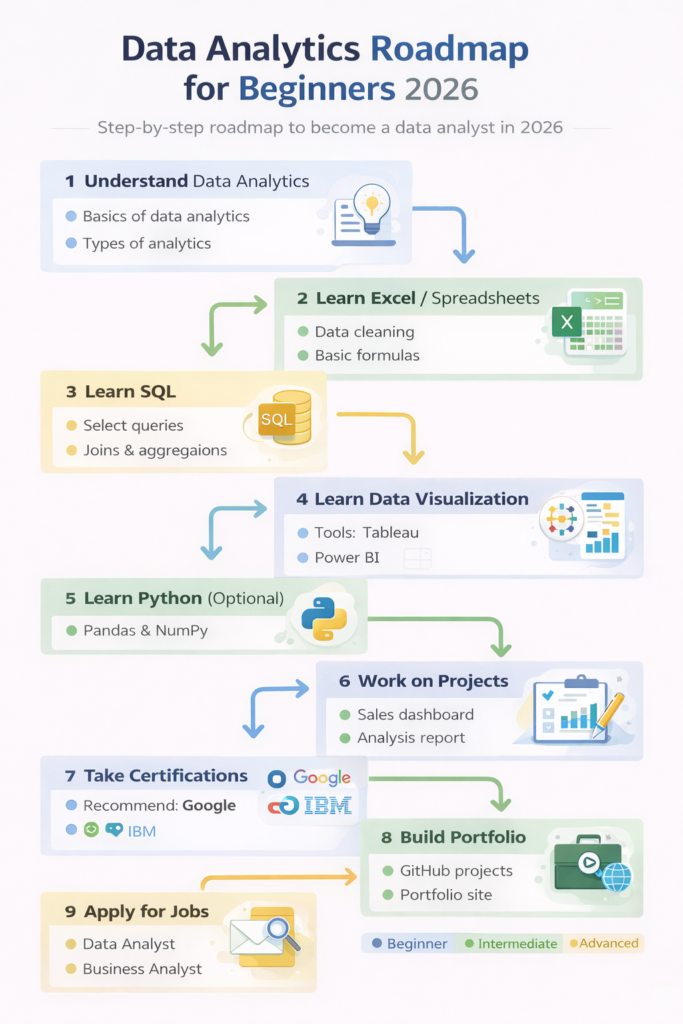
Step 1: Understand What Data Analytics Is
Before jumping into tools, understand the basics:
- What is data analytics?
- Types of analytics (descriptive, diagnostic, predictive)
- Role of a data analyst
👉 This builds your foundation.
Step 2: Learn Excel / Spreadsheets
Start with:
- Data cleaning
- Sorting and filtering
- Basic formulas
👉 Tools:
- Excel
- Google Sheets
Step 3: Learn SQL
SQL is one of the most important skills.
Focus on:
- SELECT queries
- Joins
- Aggregations
👉 Almost every data job requires SQL.
Step 4: Learn Data Visualization
You need to present data effectively.
Tools:
- Tableau
- Power BI
👉 Learn to create dashboards and reports.
Step 5: Learn Python (Optional but Powerful)
Python helps in advanced analytics.
Learn:
- Pandas
- NumPy
- Data manipulation
👉 This is where certifications like IBM help a lot.
Step 6: Work on Projects
This is the MOST important step.
Build:
- Sales dashboard
- Data cleaning project
- Business analysis report
👉 Projects = Job opportunities
Step 7: Take Certifications
Certifications help validate your skills.
👉 Recommended:
👉 Check our detailed reviews:
Step 8: Build Portfolio
Create:
- GitHub projects
- Portfolio website
- Case studies
👉 This is what recruiters look at.
Step 9: Apply for Jobs
Start applying for:
- Junior Data Analyst
- Data Analyst Intern
- Business Analyst
🔍 People Also Ask: Data Analytics Roadmap
How long does it take to become a data analyst?
It typically takes 3 to 6 months with consistent learning and practice.
Do I need coding for data analytics?
No, but learning Python can significantly improve your career opportunities.
Can I become a data analyst without a degree?
Yes, many companies focus on skills and projects rather than degrees.
Which certification is best for beginners?
The Google Data Analytics Certificate is a great starting point.
Final Verdict
The Data Analytics Roadmap for Beginners shows that becoming a data analyst is achievable with the right steps.
👉 Focus on:
- Skills
- Projects
- Consistency
Data Analytics Roadmap FAQs
Q1: What is the best data analytics roadmap for beginners in 2026?
The best data analytics roadmap for beginners includes learning Excel, SQL, data visualization tools like Tableau or Power BI, and optionally Python. Building projects and earning certifications also play a key role in becoming a data analyst.
Q2: How long does it take to become a data analyst?
It typically takes 3 to 6 months to become a data analyst with consistent learning and practice. The timeline may vary depending on your dedication and prior experience.
Q3: Do I need coding to become a data analyst?
No, coding is not mandatory to start a data analytics career. However, learning Python can help you handle advanced data analysis tasks and improve job opportunities.
Q4: Which tools should I learn for data analytics?
Beginners should start with Excel or Google Sheets, SQL, and data visualization tools like Tableau or Power BI. Learning Python is optional but highly beneficial.
Q5: Is data analytics a good career in 2026?
Yes, data analytics is a highly in-demand career in 2026. Companies across industries rely on data-driven decisions, making data analysts valuable professionals.
Q6: Can I become a data analyst without a degree?
Yes, many companies focus on skills and projects rather than degrees. Building a strong portfolio and completing certifications can help you get a job without a formal degree.
Q7: Which certification is best for beginners in data analytics?
The Google Data Analytics Certificate is one of the best certifications for beginners. For more technical skills, the IBM Data Analyst Certificate is a good option.