
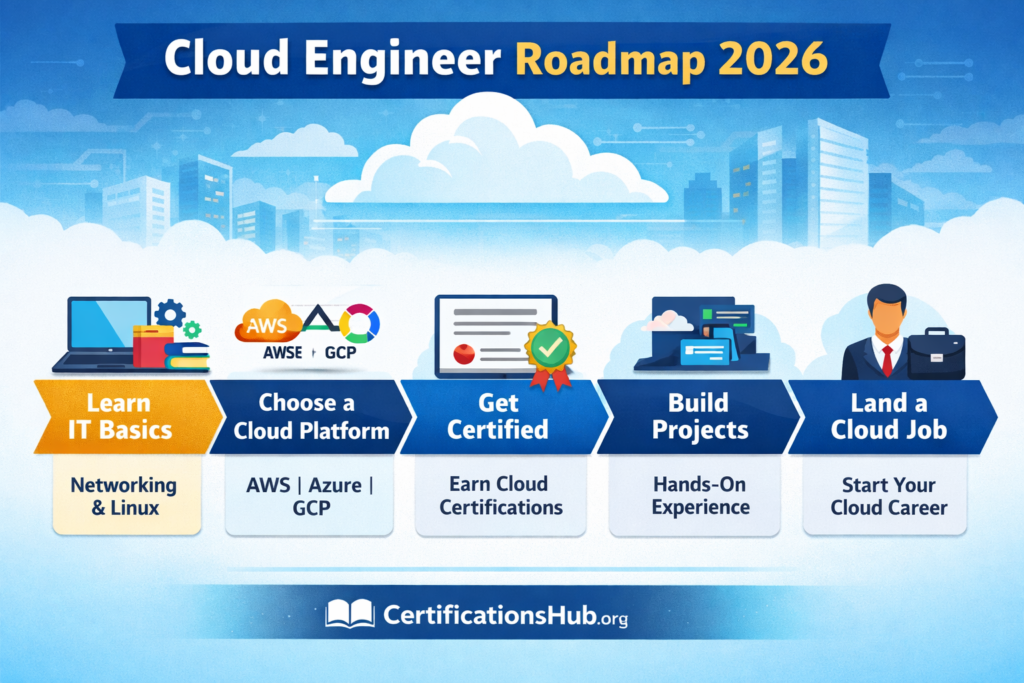
🌐Cloud computing is one of the fastest-growing fields in IT, and becoming a Cloud Engineer in 2026 is one of the smartest career moves you can make. With companies rapidly moving to AWS, Azure, and Google Cloud, the demand for skilled cloud professionals is at an all-time high.
In this complete guide, you’ll learn:
- What a cloud engineer does
- Skills you need
- Step-by-step roadmap
- Best certifications
- Salary in India
- How to start from scratch
💼 What Does a Cloud Engineer Do?
A Cloud Engineer is responsible for designing, deploying, and managing cloud infrastructure.
Key Responsibilities:
- Deploy applications on cloud platforms
- Manage servers, storage, and databases
- Ensure security and performance
- Automate infrastructure (DevOps practices)
- Monitor cloud environments
👉 Simply put: They make sure everything runs smoothly in the cloud.
💰 Cloud Engineer Salary in India (2026)
Cloud Engineers are among the highest-paid IT professionals in India.
| Experience Level | Average Salary |
|---|---|
| Beginner (0–2 yrs) | ₹4 – ₹8 LPA |
| Mid-Level (3–6 yrs) | ₹10 – ₹20 LPA |
| Senior (7+ yrs) | ₹25+ LPA |
👉 Salaries increase significantly with certifications and hands-on experience.
🧠 Skills Required to Become a Cloud Engineer
Before jumping into certifications, you need strong fundamentals.
🔹 1. Operating Systems
- Linux (very important)
- Basic Windows Server knowledge
🔹 2. Networking Basics
- IP, DNS, HTTP/HTTPS
- Firewalls, Load Balancers
👉 If you’re new, networking knowledge is critical.
🔹 3. Programming Skills
- Python (recommended)
- Basic scripting (Bash)
🔹 4. Cloud Platforms
- AWS
- Microsoft Azure
- Google Cloud
🔹 5. DevOps & Tools (Bonus Skills)
- Docker
- Kubernetes
- CI/CD pipelines
🗺️ Step-by-Step Cloud Engineer Roadmap (2026)
Follow this roadmap if you are starting from scratch 👇
✅ Step 1: Learn IT Basics
Start with:
- Networking fundamentals
- Linux basics
- Basic programming
👉 If you’re switching careers, read:
How to switch to an IT Career without a CS Degree
✅ Step 2: Choose a Cloud Platform
Pick ONE platform to start:
- AWS (Most popular)
- Azure (Great for Microsoft ecosystem)
- Google Cloud (Growing demand)
👉 Recommended:
Start with AWS if you’re confused.
✅ Step 3: Get Certified
Certifications help you:
- Build structured knowledge
- Improve job chances
- Increase salary
Start with beginner certifications:
👉 Read:
- AWS Certification Roadmap 2026
- Azure Certification Roadmap 2026
- Top Cloud Certifications for Beginners in 2026
✅ Step 4: Move to Associate-Level Certifications
Once basics are clear:
- AWS Solutions Architect Associate
- Azure Administrator (AZ-104)
- Google Associate Cloud Engineer
👉 These are job-ready certifications
✅ Step 5: Build Real Projects
This is where most people fail.
Build:
- Deploy a website on AWS
- Create a cloud-based storage system
- Set up CI/CD pipeline
👉 Projects = Proof of skills
✅ Step 6: Learn DevOps (Optional but Powerful)
To stand out:
- Docker
- Kubernetes
- Terraform
👉 This can double your salary potential.
✅ Step 7: Apply for Jobs
Apply for roles like:
- Cloud Engineer
- Cloud Support Engineer
- DevOps Engineer
🎓 Best Certifications for Cloud Engineers (2026)
Here are the most valuable certifications:
🥇 Beginner Level
- AWS Certified Cloud Practitioner
- Azure AI-900 / AZ-900
- Google Cloud Digital Leader
🥈 Associate Level (Highly Recommended)
- AWS Solutions Architect Associate
- Azure Administrator (AZ-104)
- Google Associate Cloud Engineer
🥉 Advanced Level
- AWS DevOps Engineer
- Azure Solutions Architect
- Google Professional Cloud Architect
👉 For detailed comparison, read:
AWS vs Azure vs Google Cloud Certification
⚔️ AWS vs Azure vs Google Cloud – Which One Should You Choose?
Here’s a quick comparison:
| Platform | Best For |
|---|---|
| AWS | Most jobs, highest demand |
| Azure | Enterprise companies |
| GCP | Data & AI roles |
👉 If unsure → Start with AWS
📊 Cloud Engineer Roadmap Summary
| Stage | What to Do |
|---|---|
| Step 1 | Learn basics (Linux + Networking) |
| Step 2 | Choose cloud platform |
| Step 3 | Get beginner certification |
| Step 4 | Move to associate certification |
| Step 5 | Build projects |
| Step 6 | Learn DevOps tools |
| Step 7 | Apply for jobs |
🚀 Final Thoughts
Becoming a Cloud Engineer in 2026 is very achievable, even if you’re starting from zero.
Key Tips:
- Focus on skills + projects, not just certifications
- Stick to one cloud platform initially
- Practice consistently
👉 With the right roadmap, you can land a cloud job in 6–12 months.