
Introduction
Cybersecurity has become one of the fastest-growing fields in the IT industry. As cyber threats continue to increase worldwide, organizations are actively seeking skilled cybersecurity professionals to protect their systems and data.
For beginners entering the cybersecurity field, certifications can provide a structured way to learn essential security concepts and demonstrate expertise to employers. Several certifications are designed specifically for individuals starting their cybersecurity careers.
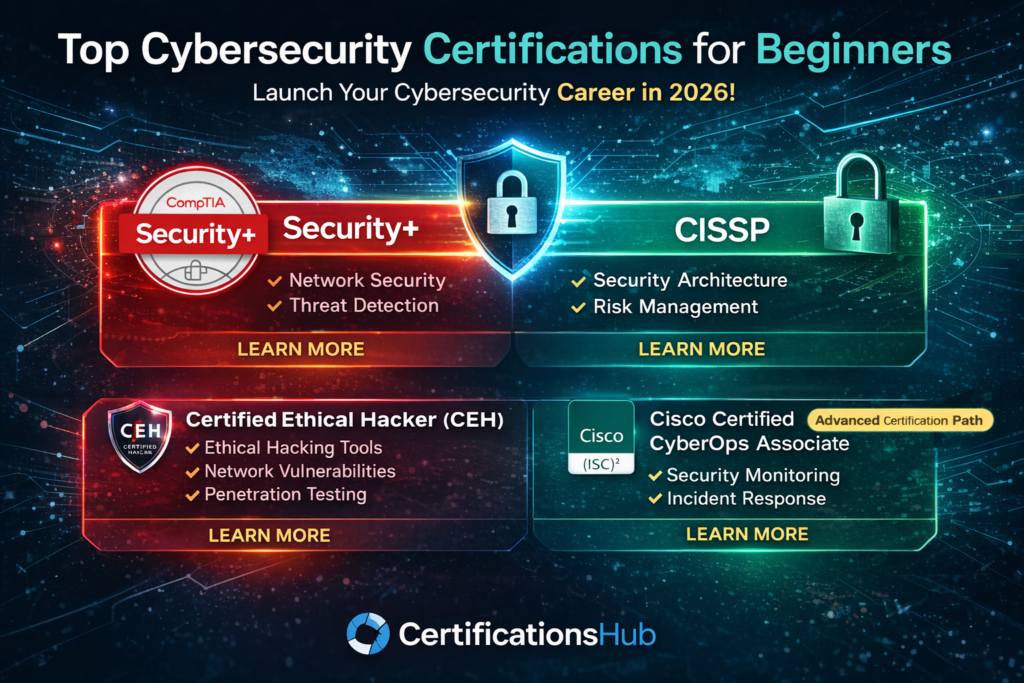
In this guide, we explore the top cybersecurity certifications for beginners, including certifications that help build foundational knowledge in network security, threat management, and ethical hacking.
1. CompTIA Security+
The CompTIA Security+ certification is widely considered one of the best entry-level cybersecurity certifications. Security+ certification is offered by CompTIA and validates foundational cybersecurity knowledge.
It covers essential topics such as:
- Network security
- Threat detection
- Risk management
- Identity and access management
- Cryptography
Security+ is vendor-neutral and recognized globally, making it an excellent starting point for cybersecurity careers.
Common roles after Security+:
- Security Analyst
- IT Security Specialist
- Security Administrator
If you want to understand the exam structure and preparation tips, check our CompTIA Security+ Certification Guide.
2. Certified Ethical Hacker (CEH)
The Certified Ethical Hacker (CEH) certification focuses on ethical hacking techniques used to identify vulnerabilities in systems. The Certified Ethical Hacker certification is offered by EC-Council and focuses on ethical hacking skills.
Professionals with CEH certification learn how hackers think and how to protect systems from cyber attacks.
Topics covered include:
- Ethical hacking tools
- Penetration testing
- Network vulnerabilities
- Malware threats
CEH is ideal for professionals who want to specialize in penetration testing and ethical hacking. You can also explore our detailed comparison of Security+ vs CEH Certification to understand which certification is better for beginners.
3. Cisco Certified CyberOps Associate
The Cisco CyberOps Associate certification is designed for beginners who want to work in cybersecurity operations roles. Cisco offers the CyberOps Associate certification for professionals interested in cybersecurity operations roles.
This certification focuses on:
- Security monitoring
- Incident response
- Network security fundamentals
- Security operations center (SOC) skills
It is particularly useful for professionals interested in working in SOC analyst roles.
4. Certified Information Systems Security Professional (CISSP)
Although CISSP certification is considered an advanced certification, it is often included in cybersecurity career paths because many professionals pursue it after gaining experience in the field.
CISSP focuses on advanced security concepts such as:
- Security architecture
- Security engineering
- Risk management
- Security operations
It is widely respected and often required for senior cybersecurity positions.
How to Choose the Right Cybersecurity Certification
Choosing the right certification depends on your career goals and current experience level.
Choose Security+ if you want a strong foundation in cybersecurity fundamentals.
Choose CEH if you want to specialize in ethical hacking and penetration testing.
Choose CyberOps Associate if you want to work in a Security Operations Center (SOC) environment.
Professionals often earn multiple certifications over time to expand their cybersecurity expertise.
Career Opportunities in Cybersecurity
Cybersecurity certifications can open doors to several high-demand job roles.
Common cybersecurity job roles include:
- Security Analyst
- Cybersecurity Engineer
- Ethical Hacker
- Security Consultant
- Information Security Specialist
With increasing cyber threats worldwide, cybersecurity professionals are expected to remain in high demand for many years.
Skills Required to Start a Cybersecurity Career
To succeed in cybersecurity, beginners should develop a strong foundation in several technical areas. Cybersecurity professionals are responsible for protecting networks, systems, and sensitive information from cyber threats.
Some important skills that beginners should learn include:
- Networking fundamentals such as IP addressing, routers, and firewalls
- Operating systems knowledge, especially Linux and Windows security
- Basic programming or scripting using languages like Python or Bash
- Understanding cyber threats such as malware, phishing, and ransomware
- Security tools and monitoring systems
Certifications such as CompTIA Security+, CEH, and Cisco CyberOps Associate help beginners develop these skills and prepare for real-world cybersecurity roles.
Many beginners also build practical experience through cybersecurity labs, capture-the-flag challenges, and hands-on practice platforms.
Final Verdict
Cybersecurity certifications are an excellent way for beginners to start their careers in information security. Certifications such as CompTIA Security+, CEH, and Cisco CyberOps Associate provide strong foundational knowledge and practical skills required in the cybersecurity industry.
By earning relevant certifications and gaining hands-on experience, beginners can build successful careers in cybersecurity. For professionals planning long-term cybersecurity careers, it is also helpful to understand the difference between Security+ vs CISSP Certification.
You can also explore our Top IT Certifications in 2026 guide to discover other valuable certifications for technology professionals.